
Problems to Solve, Tensions to Manage
How organisations in Australia are navigating the new realities of responsible business
Ithaca Impact is a responsible business firm based in Australia and working globally. We walk alongside companies, philanthropic organisations, portfolio companies, international development organisations, and governments as a trusted advisor, helping them tackle complex social challenges, driving positive investment and measurable impact.
This post is the first in a two-part series. The second piece will explore how these trends are playing out internationally across the Asia-Pacific and global development landscape, where Ithaca also works extensively.
Among the many challenges that organisations face today, there are problems to solve and there are tensions to manage.
For decades, business and social impact have been considered opposing priorities. We’re taught that business exists to generate profit. Not-for-profits and philanthropy exist to create social good. One creates shareholder value. The other creates community value.
In 2026, that division is becoming increasingly difficult to defend.
Governments alone cannot solve complex social and environmental challenges, and investors, employees, regulators and communities increasingly expect organisations to think carefully about how they operate, who benefits and what long-term outcomes they help shape.
When we start to reimagine business and social impact as mutually reinforcing rather than inherently at odds, they become less of a problem to solve and more of a tension to manage.
The visual below is inspired by polarity thinking, which reminds us of the dynamic relationship between these two domains. There’s a living, breathing tension here that must be thoughtfully and carefully managed. Without doing so, the risk of over-prioritising commercial performance comes at the expense of trust and relationships within the community and can ultimately undermine long-term business success. Similarly, pursuing impact without vigilance around commercial sustainability or operational discipline can limit scale and resilience.
Whether it’s corporate philanthropy, ESG reporting and compliance, community partnerships or operational decision-making, responsible business lives and dies in how well businesses manage this tension.
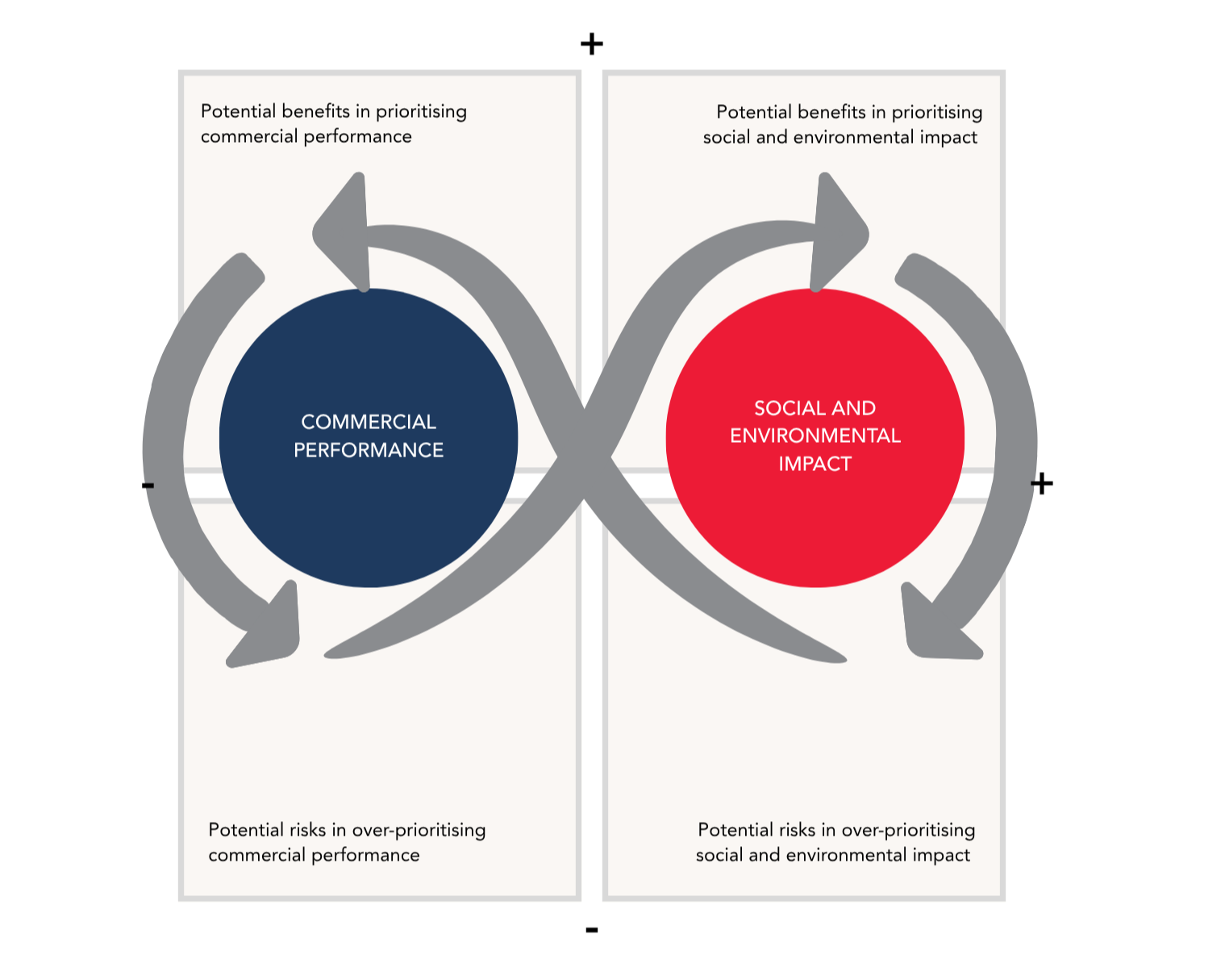
Figure 1: Polarity Map
Visualising this shift in mindset and practice: from treating business and impact as separate and competing domains (a problem to solve once) to treating them as a complementary and interconnected domains (a set of tensions to be managed).
Three Tensions Shaping Responsible Business
Zooming into the day-to-day realities of sectors such as mining, renewable energy, infrastructure, philanthropy and international development, our work at Ithaca Impact consistently reveals three tensions that require thoughtful day-to-day management:
performance and legitimacy,
scale and proximity, and
reporting and reality.
How organisations navigate these tensions increasingly shapes not only social impact outcomes, but organisational trust, resilience and sustainability.
Tension One: Performance vs Legitimacy
The first tension organisations seem to consistently face is between commercial performance and long-term legitimacy.
This is becoming particularly visible across sectors such as mining, renewable energy and infrastructure, where investor expectations, regulatory scrutiny and community expectations shape the conditions under which projects proceed, let alone succeed.
In Queensland,recent planning reforms now require large-scale renewable energy projects to undertake Social Impact Assessments and negotiate Community Benefit Agreementsbefore development applications can proceed, embedding social licence and community impact directly into project approvals processes. What we’ve observed is that the risk of not doing these activities well is significant, but when done well, they can lead to tremendous payoffs in ensuring the economic and social value created by the clean energy transition is meaningful to and shared by the local community.
At the same time, organisations across the resources and energy sectors are facing growing pressure from investors, governments and communities to demonstrate not only economic contribution, but credible long-term stewardship, engagement and accountability.
The challenge for organisations is no longer whether they engage with responsible business, but how credibly they navigate the relationship between commercial pressure and long-term trust.
Tension 2: Scale vs. Proximity
A second tension emerges around scale and proximity.
As responsible business becomes more mainstream, we see corporates, community organisations and philanthropic partners walking alongside one another, exchanging knowledge, capability, partnerships and long-term investment into the systems and communities they operate within.
This is becoming more visible across Australia’s growing investment in place-based and community-centric approaches where governments, philanthropy and corporates are increasingly recognising that lasting outcomes are built through local ownership, long-term trust and community-led partnership. This shows up clearly in programs tackling complex challenges facing Australia’s youth. And there’s a growing body of evidence for this, reminding us that enduring youth outcomes are shaped less by short-term service delivery and more by young people’s sense of belonging, agency and connection within their local communities.
At the same time, organisations are under pressure to scale impact, demonstrate measurable outcomes and deploy resources efficiently. This creates a difficult balancing act, particularly for community-based and early-stage but promising programs where trust, local relationships and deep contextual understanding are often central to success.
The private sector is typically well equipped for scale while many community organisations prioritise depth of relationship, local responsiveness and long-term trust. Neither approach is inherently wrong, but in responsible business contexts, these different operating rhythms create a tension that needs to be proactively managed.
The risk, of course, is that contribution becomes transactional: efficient on paper, but disconnected from the communities it is intended to benefit.
Tension Three: Reporting vs. Reality
As responsible business becomes more embedded into governance and regulation, organisations across sectors are facing a growing pressure to demonstrate that sustainability commitments translate into operational practice.
We see this show up in mining, energy and infrastructure through conversations around social licence, cultural heritage, ethical supply chains and decarbonisation commitments, where stakeholders are scrutinising not only what organisations report publicly, but whether operational decisions, investment priorities and community outcomes align with those commitments over time.
This scrutiny is also intensifying alongside the rise of mandatory sustainability disclosure regimes and growing regulatory attention to greenwashing. This includes ACCC guidance emphasising that environmental and sustainability claims must be evidence-based, transparent and supported by genuine action, not mere aspiration.
Reporting and disclosure remain important, particularly as global standards such as the ISSB sustainability disclosure framework push organisations toward more consistent and decision-useful ESG reporting. Increasingly, however, organisations are being judged on whether responsible business principles are genuinely embedded into governance, procurement, partnerships and day-to-day decision-making.
This is where responsible business moves from a reputational exercise to a core capability.
Responsible Business as Integration
While these tensions are real, it would be a disservice to suggest that they can be managed through a simple checklist or three-step process.
Responsible business operates within complex systems characterised by competing expectations, commercial pressures and evolving social norms. The challenge, then, is not to eliminate these tensions altogether, but to manage them as productive and necessary dynamics within your organisation.
At Ithaca Impact, we think about responsible business less as a standalone ESG or philanthropic function and more as a question of integration: how organisations embed social and environmental considerations into strategy, governance, operations and decision-making over time.
This looks different across sectors and organisations. A mining company operating in regional Australia faces different pressures and responsibilities than a family foundation, portfolio company or international NGO.
Our “Levels of Integration” framework (see below) reflects some of the common ways organisations navigate these challenges in practice, from philanthropy and community investment through to deeper integration into organisational strategy and operations.
Importantly, we do not see this as a rigid maturity model or a linear pathway. Rather, the organisations creating the strongest long-term outcomes are often those treating responsible business with the same rigour and strategic thinking as any other core business function.
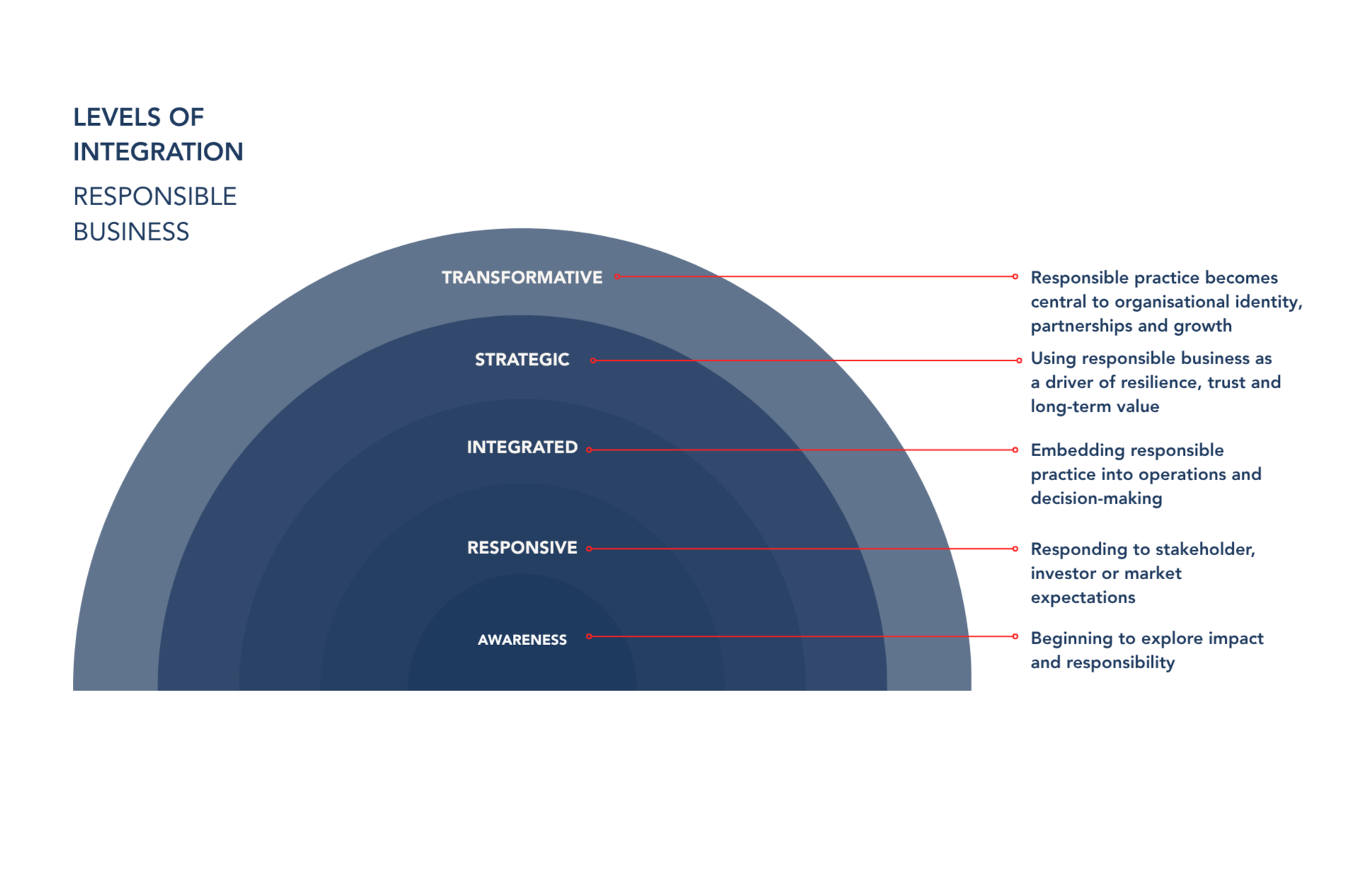
Figure 2: Ithaca Impact’s Levels of Integration Framework
Actively managing these tensions requires thoughtful considerations of strategy, governance, operations and decision-making.
Final Reflections
Perhaps the most significant trend we’re seeing in responsible business today is not simply that more organisations are engaging in it, but that social and environmental considerations are increasingly shaping the conditions under which organisations maintain legitimacy, social license, influence and long-term resilience.
As this accelerates, responsible business is becoming less about solving isolated problems and more about navigating ongoing systemic tensions.
These tensions are unlikely to disappear. We would even suggest that they reflect, in a productive way, the growing interconnectedness between business, communities, governments and social outcomes themselves.
While problems offer a neat resolution, tensions do not – and perhaps that’s the point.
Responsible business is not a static destination or communications exercise, but an ongoing practice of navigating complexity, balancing competing pressures and remaining accountable to the communities and systems organisations shape over time.
At Ithaca Impact, we believe the question is no longer whether business influences social outcomes. It is whether organisations are prepared to navigate that complexity thoughtfully, transparently and accountably over time.